health

Everyday Resolutions

The end of each December is a popular time

to turn over a new leaf.
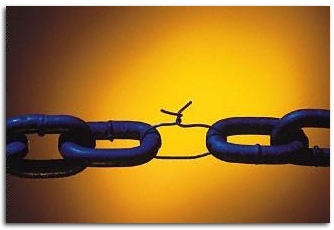
Rather than making New Year’s Resolutions, I resolve to improve my weak links on a daily basis, as the need arises, and believe me the need arises. But New Year’s Day is as good a day as any to get started, however, it is getting started and never stopping that is what’s worth keeping in mind.

Over the years, I have adopted the motto: “If what you are doing isn’t working, doing more of it won’t work any better.” And I practice implementing these words into my everyday actions.

Be it how I communicate with my kids, how I make lifestyle changes to eliminating plastic from my life or how I am constantly making adjustments with my body alignment, which causes me to re-evaluate and reconfigure my daily body maintenance routine. (My week 3 Day 7 progression has evolved greatly in the last three years.)

We must practice accepting that what we are doing may not be right and that through exploration we can continue to make improvements. Unless of course, you desire to live your life like a store display mannequin, frozen in time, not having to think or to adapt or to change; believing that what you are doing is right and that the problems you face must be faults outside your control. Most of us don’t know how to eat properly for optimal health, most of us don’t know how our body works, most of us don’t really know that much about the world we live in and how to take care of it.

When we take pause and consider that in order to survive, all of us must thrive on being right, on having the correct beliefs. In other words, if we don’t believe that what we do is correct would we not be crazy for repeating them over and over again? For even the addict, though often knows what he does isn’t right can find an excuse to justify and comfort his addiction. And so he believes that he is right, even if only for a moment in time. (There are many levels of addiction, from coffee, chocolate, exercise, drugs, pharmaceuticals, supplements, social media etc.)

IMG_2493

What makes us do what we do?

Try as you might, to control your life, change is inevitable. As our lives change it is wise to become familiar with change in order to adapt without resistance, which enables a symbiotic synergy with family, community and the environment on a larger scale.

I like change. Similar to a cat, I like to see how I will land, and I have learned that there is no one way to land, (although the ideal is to land on ones feet!) which makes it all that more intriguing. As a result, I find myself constantly fine tuning my behaviours and habits, which puts me in a prime position to say a thing or two about how to initiate change.

Here are some basic suggestions:

Q: I want to change ______, but how do I even get started?

A: Getting started can be as simple as having an idea and making the decision to follow through on that idea. However, within this simple step there are a few sub-steps to climb:

You need discipline to develop skill. But, you need to spend some time developing skill to become disciplined.  You must have the willingness and desire, also known as passion or wanting it badly enough to spend the time developing the skill to become disciplined in the first place. Achieving goals and changing habits is not linear but rather cyclical and overlapping.

How To Cultivate Self-Discipline

So even when a person is committed to making change and making personal improvement, you can see it is not seamless. It is not easy or foolproof. It still requires a lot of work.  To outsiders having self-discipline looks effortless, but for those who practice being consistent there is no compliment in off-hand remarks such as: “oh, well you have self-discipline”, as if it were built-in. As if those who achieve anything remarkable is born with a natural talent.

Anyone can develop self-discipline, but it doesn’t just manifest, it must be cultivated. Anyone can be fit and healthy, but it takes effort, discipline and education. It takes practice to become consistent with self-discipline. Period.

Q: I’ve made many resolutions in the past but have always fallen short. How do I change this behavior?

A: By being consistent. Self-discipline is borne from being consistent. Don’t give up on yourself. There is a lot of self-coaching that goes along with keeping your word to yourself. It’s also helpful to understand that goals change along the way. Just because you initiate change with a certain idea doesn’t mean you will stick to that forever. As you learn more about yourself you will be required to re-evaluate your strategy and fine-tune your approach as you go along. You are a work in progress. The goal itself isn’t the point. The point is to realize your human potential and perpetually raise your own bar.

The goal isn't the goal

Q: I tend to stick to a program when I have someone to answer to, like a personal trainer or when I go to a group class.

A: Learn to become accountable to yourself. Try not even telling anyone what changes you have planned. Learn the necessary skills from someone more skilled than yourself and employ self-discipline to become your own expert.

When I had a studio, many of my clients had more money than discipline. Instead of practicing what I taught them so that we could develop their skills to the next level they would use me as a crutch to put them through their paces. Be a willing student because money cannot buy improved health, fitness or skill.

Q: How do I create lasting change?

A: Setting a new habit requires repetition. Let’s say for example that you want to lose weight and get in better physical condition. I believe it is best achieved by making very small changes so as to not overwhelm oneself, which is the idea behind my 4-minute morning series.

Hopefully, as you go through the progressions, you will learn more about yourself (how your mind works) and your body and discover areas that need further exploration. Note: ALL areas need further exploration 🙂 My 4 minute morning series of progressions is the foundation for developing a consistent practice of self-discipline. It is simple but can you do it? Oftentimes it is the simple things that are the most challenging.

I believe that exercise is meant to establish a balanced musculoskeletal system. When we are in balance, our body works at an optimal level (which is different for everyone).

Important: If you exercise with poor body alignment you will only reinforce an unbalanced musculoskeletal system. Keep in mind that when you practice Yoga, run, walk, swim, cycle or lift heavy weights among many other activities, the point of what you are doing is to build an ideal structure that is trained to move in an optimal way when you engage in life: sitting at your desk, driving a car, sitting on a bus, walking, grocery shopping etc. It is the mundane repetitive activities associated with living that require this steady stream of awareness. 

“We don’t rise to the level of our expectations, we fall to the level of our training.”

―Archilochus 

~Happy New Year 2014 ~Happy New Year 2014 ~Happy New Year 2014 ~

Genuine Transformation

Genuine Transformation
My cousin Justin Kalef is currently teaching Logic at Rutgers University. I had a chance to chat with him briefly at a family dinner over the 2012 winter holidays. It was around the same time that I was mulling over the contents for the article I was composing on belief. Justin was the perfect person to ask some of the questions that I was working on. He told me what he tells his students on their first day of class, because from his experience teaching, it is inevitable that at some point during the course, one or some students will come to him completely overwhelmed.

We were talking about belief and how our beliefs can affect our ability to make long lasting change in our lives. When he said the following phrase:

“…but it’s only difficult for who you are now.

For the person you will become, 

it won’t be difficult at all.”

How great is this sentence? I think we could all do well to repeat this to ourselves daily. I asked him if I could use it for my belief article, and then I thought better of it…let’s tell the entire speech. So here you are, sit back and soak up these wise words.

“One of the things I do at the start of all my courses

is tell my students to think of the course like thinking of a physical training program (weight lifting or running). Suppose, I say, your goal is to run a 10k run in four months, but you can’t even run down the block now. Or suppose that you want to be able to do a shoulder press with fifty-pound weights in four months, but right now you can only do it with five-pound weights and you can barely lift ten-pound weights.

50 pound weights

These things are possible to achieve in four months’ time. If you go through a training program and are able to reach your goals by the end, you’ll be able to look back down the mountain when it’s all over and say:

‘Wow, I started out that far down and look where I am now!’

Looking down the mountain.

Look How Far You’ve Come!

Ideally, you’ll be able to do that at several points: each month, you should be able to look back to where you were the previous month and be impressed with how far you’ve come. If you can’t do that — if at the end you’re exactly where you were at the start — then that’s a sign that it didn’t work.  If you haven’t progressed in a month, then something went wrong. You didn’t commit enough or your guide didn’t find a way to climb the mountain — maybe both.

So my promise (I tell them) is this: I have worked out a path that you will be able to follow with me to the top of the mountain. There are some things you’ll be able to do at the end that you just can’t do now: here they are (and I set them out plainly). The mountain is high, but my path will allow you to get there a little at a time. If you need to go slower at some points, there are other paths for those times. And if you’re committed to it, you’ll see each month that you’re far in advance of what you could do the month before. That’ll be proof of your progress, and I make the promise to you now that you can make it if you follow my plan.

However, there’s a flipside to that. Logically speaking, if there’s something you’ll be able to do a month from now that you can’t do today, that same something must be out of your range today. And the things you’ll be able to do at the very end are way out of your range today. That comes with the course being a worthwhile one for you, but some people can find it scary.

They say, ‘I can’t do that!’

And they’re completely right:

They can’t.

If they could already do it, there would be no point in their taking the course!

Think of it this way (I tell them): if you can only shoulder-press with five-pound dumbbells and can barely lift the ten-pound ones out of the rack, then of course you can’t shoulder-press the fifty-pound ones. You might resolve to do it anyway, but you’d fail. You just can’t do it. That’s why you’re training toward that goal.

Going in circles

So: if there’s something you want to be able to do and already can do, then any training program designed to get you there is a waste of time and will only take you in a circle. So any reasonable goal must be something you can’t do yet.

And that means that any reasonable goal you have must be something that’s impossible for you to do!

Still, the situation isn’t hopeless. There’s one — and only one — reasonable way to see your training: your training takes something that’s currently impossible for you to do and makes it possible by changing you from someone who can’t into someone who can. So today, you can say ‘I can’t do this — but I can transform myself into someone who can.’ And that’s the key to training: transforming yourself into someone with more powers than you have today.

This is literal transformation: mentally or physically, you’ll be a different person with different abilities. You’ll even have different desires and values: things you find frustrating now won’t be to your future self, and things you find tempting now will be less so.

Genuine self-transformation can be very difficult in the short term,

but it’s only difficult for who you are now.

For the person you will become,

it won’t be difficult at all.

Today, you say to yourself “Living by this routine is so difficult — when will I be able to do the things that I want?” But perhaps you’re only thinking of what the present version of you wants: not the future you. If your self-transformation is to be successful, the routine will not remain difficult. You’ll miss it if you don’t  follow it.

So instead of saying: “This is difficult for me,”

say: “This is difficult for me now,

but I’m transforming myself into a person for whom it isn’t difficult.”

Otherwise, you run the risk of leaving it up to your present desires to choose the values and habits of your future.”

-Justin Kalef


Belief and Butterflies

 I think a lot about belief,

how we shape our beliefs and

where those beliefs come from.

Believe Nothing.

You Are Your Own Religion.

Following the advice from the above quote is a lot more complicated than it first appears, because who we are, what we think and how we act (or react) is heavily grounded in our history, customs, traditions, who we look up to, what we read, see and have been taught.

What is your own reason?

What is your own common sense?

It takes practice to sit quietly ruminating on questions that reveal our true individual beliefs. It is difficult to set aside the beliefs that we have been taught as being correct (that gave us top marks), to settle on our true nature.

Can anyone really say that their beliefs are not affected by the world around them? We hold on so tightly to our beliefs. And it makes perfect sense to do so, because having strong beliefs is our natural link to survival. But there can be a point when belief becomes rigid and prevents us from growing and exploring possibilities. Beliefs come in all shapes and sizes. Not all beliefs come in the form of a radical-life-changing shift. Sometimes when we make a small (as in microscopic – barely noticeable) shift to a long held belief, it at first may seem insignificant, but it is often these little ripples that offer the most catalytic potential. Think of the butterfly effect.

“It has been said that something as small as the flutter of a butterfly’s wing can ultimately cause a typhoon halfway around the world.”- Chaos Theory

Since before starting my blog/website in April 2011, I have been experimenting with consciously shifting my comfort zones, which I have come to realize is actually making micro changes to my beliefs – to my world, as I know it.

It takes practice to change,

and practice requires being consistent.

Here are two examples of what seems like very insignificant beliefs (beliefs shape our patterns and behaviour) that I resisted changing and how much I have learned and grown from adapting to these changes. A few months before I embarked on this hobby of writing a blog, I decided that I would, without fail, each and every night for the rest of my life…floss my teeth. Sounds life changing doesn’t it? It was my butterfly effect.

Butterfly

I have always been consistent with cleaning my mouth and teeth, to a fault I recently learned. I wrote about it here. And I have always flossed my teeth, just not daily :). I would go through phases of being consistent with flossing (like for a week), and then neglect the practice to a now and then or when I would remember kind of practice. Don’t we all do that for a lot of different things in our lives? When things seem to be going OK, we put off doing the jobs that take the least amount of time because we don’t value their significance or impact in the big picture.

“There is no ONE GIANT step that does it,

it’s a lot of LITTLE STEPS.”

It has now been over two years without missing a single day of flossing! My oral health has improved dramatically. Ironically, I have cut back on the frequency of brushing my teeth (the article I refer to above explains this in detail). And as a result of these shifts my self-discipline has improved dramatically too. I am becoming more accomplished at doing ten, twenty and sixty-second jobs that would otherwise be put off to another time. This butterfly effect has changed my patterns. It was a test you see. I tested myself with something that would have zero impact on anyone else. With something that literally takes sixty to ninety seconds. It was something that would make a big difference to my life and health, something that I could do or not do and no one would know whether I failed or kept my word, except for my dentist and hygienist ;). Don’t fool yourself if you really think that your oral health care practitioner believes you when you tell them that you floss regularly. If you have bleeding gums and oral health problems somebody’s not doing a very effective job and the end result is the obvious proof of the neglect. And we all know who that someone is. Hmmm?

“If what you are doing isn’t working, doing more of it won’t work any better.”

People come up with the most elaborate excuses for not flossing daily (or at all!) and are genuinely amazed as to why they have oral health problems. It is a lot like when I ask my kids if they have brushed their teeth in the morning (knowing they haven’t because I can smell their ‘morning breath’). Instead of arguing that I know that they have not done it, rather I tell them that they should do it again, because the job they did wasn’t very effective. And if they need help doing it properly, I would be happy to help.

“If you’re going to do something, do it right the first time.”

It is much like being overweight or having general health problems. The remedy is so obvious to everyone looking in but not at all to the person affected. And yet even to those looking in, though they can see what the affected person is doing wrong, they have the same difficulty seeing what isn’t working for themselves. Everyone is looking for a medical test to diagnose what it is that is causing his or her illness. Looking outside of themselves for answers, for someone else to do the LITTLE STEPS for them. May I suggest? Do the daily little steps; test your-self for a couple of years and see what happens. If you do it right, it will work.

“If it is important to you,

You will find a way.

If not?

You will find an excuse.”

~Frank Banks

But don’t be misguided; I don’t believe that there is such a thing as perfect health. There is not a place to get to where we just float along without minor pain or discomfort from time to time. The human body is volatile. There is no pain-free life, just as there is no stain-free steel. (Stainless steel isn’t stain-free, it just stains less.) We may become pain-less, but to expect to have a pain-free life is quite the tall order to have for our existence. Perhaps we need to reexamine our expectations and the beliefs attached to those expectations. Apparently the snake-oil salesmen from years gone by are still doing excellent business selling false hope and promises. We need to walk away from those snake-oil salesmen and practice our own little steps.

Snake-Oil Salesman

So, around the same time that I started my flossing experiment, I started doing my 4-minute mornings, which was an interesting shift in beliefs, to say the least. Because what is most interesting to me is that I used to tell clients, twenty years ago about a study that showed that even ten minutes of exercise, repeated three times a day was shown to be as effective as doing thirty-minutes of exercise at one time. I used to dish out that study but I never experimented with it for myself and I doubt that anyone really gave it much credence. My world back then was all about teaching hour-long aerobic, step or cycle Reebok classes. Everything was based on time: hour-long one-on-one private training sessions, hour-long stretch classes, hour-long toning classes and hour-long Pilates classes. For those of us interested in supporting our health, we were willing to put in that hour a day and for those of us in the business, well, we spent all day being physically active. So, for me to downshift these theories (beliefs) in health and fitness to a radical drop in duration was a tough pill to swallow. Could 4 minutes of something really have any significant effect on the body? I decided to experiment for myself. I speculated that 4 minutes once in a while might not be very effective, but 4 minutes daily might…I was willing to see what might happen.

The results have been quite fascinating. I have learned about being disciplined with a daily short duration routine that would otherwise be very easy to dismiss or put off. Every morning for the past two years I have done the same routine, which has evolved from starting out as a few minutes of bed stretches into twenty minutes of a variety of stretches and calisthenics. The significant piece to take away from this is that it is not about the duration (the time spent doing these exercises) but rather in doing specific exercises to correct and maintain MY functional alignment. And the fascinating piece is that I don’t spend more than a minute or two on most of the stretches or exercises. Duration is not as relevant as is the focus and precision attached to each stretch or movement. In other words, what is more important is WHAT you do and HOW you do it.

Exercise is more than moving and perspiring for an extended period of time. Perhaps this is a long held belief that needs to be revisited and questioned? What do you think exercise is? Do you believe that by getting your ‘heart rate up’ for an extended period of time your body will automatically realign itself and by default magically transform into an Adonis?

Sorry, it begs repeating: “If what you are doing isn’t working, doing more of it won’t work any better.”

If we repeat a physical action misaligned, then our end result will be reinforced misalignment.

Losing body fat and having a functionally sound mechanically efficient body are two very separate actions. Losing body fat through exercise doesn’t automatically generate a functionally sound mechanically efficient body, however the opposite is more likely probable of igniting change.

“When you have eliminated the impossible,

whatever remains,

however improbable, must be the truth.”

–Sherlock Holmes

I have discovered that I really like to start my day like this (bed stretches etc.) and will make every effort to get to bed on time so that I can clock eight hours of sleep and still be able to wake up with enough time to do my morning routine before I start my mom-duty. “If it is important to you, You will find a way. If not? You will find an excuse.”

“If you believe you can or you believe you can’t – you’re right.”

~Henry Ford

What Is Normal?

We Are All Weird, by Seth Godin

Seth Godin published a little book in 2011 called We Are All Weird. Click on the title to read an excerpt.

You’ve really got to think hard about this:

Being normal is based on what the average person does, through conformity.

Following this logic, I am, therefore, far from normal. Not in every way but in many ways. But I’ve known this since I was a kid. Most of us so called “weird” ones have been OK with our standing. We know we’re different. But there are many who are still learning to accept their differences and with every ounce of their being resist their nature and struggle to fit in or to be “normal-like-everyone-else”.  I would like to encourage everyone to be true to who you are, not who you think you should be; there is a difference.

Let’s talk about food for an example.

On occasion people say this phrase to me: “Well, you’ve got to live!” Often in reference to doing things that they know that they shouldn’t be doing; for instance consuming certain foods or drinks.

Eating Contest

Eating Contest

Since when, why and how did engaging in risky behavior equate living? And why is it so often about consuming substances? Is it that charge of adrenaline that is so titillating – oh, how it wakes us up like we have never been awake before and bang! we feel alive. Again, let’s do it again, but let’s push the envelope a little further this time. It is a heavy question with reasoning that could fill the infinite scroll down potential of any blog. I think the adrenaline rush associated with extreme sport is a little different from the rush derived from consuming substances, but they straddle the same hemisphere. So if you will, allow me to ramble for a minute.

At a restaurant, about sixteen years ago, when I was just dating my husband, he said to me, “If I’m going to risk my life why would I choose to do so by doing something as unadventurous as eating mussels?” I fear, most people are ignorant of the toxins present in the foods or drinks they choose to consume. Some restaurants actually have a disclaimer on the menu where items such as mussels, clams and raw oysters are served.

Cooked Mussels

Cooked Mussels

I am very aware that how I conduct myself is not the norm. The fact that I feel like I am “living” everyday without sacrificing anything, would categorize me once again as weird.

Definition of Sacrifice:

“an act of giving up something valued for the sake of something else regarded as more important or worthy. We must all be prepared to make sacrifices.”

Must we?

Ah…sacrifice. It is such an interesting word, such an interesting feeling. It has been a long road of learning, but I can honestly say that I am at such a place where sacrifice does not exist. There is nothing that I would have to give up to be where I am. I make time to focus and take care of myself everyday because that is where I want to be. I eat well all the time because I want to – because it makes me feel great; and because really, for me there is no alternative.

It seems to be more difficult for others to accept that I have accepted that celebration and reward does NOT come in the form of food or alcohol or excess. I am right where I should be and continue to learn more about my body, mind and health each day. I have chosen to represent this sentiment with a photograph of a bee in flight, just approaching a flowering chive. Why? Because bees have focus and it seems to me like they enjoy what they do. It comes down to perspective.

I choose not to eat or drink anything that disagrees with my system. I choose not to eat or drink anything just to please a host or because it was a gift. The story of The Hungry Coat: A Tale from Turkey comes to mind when I think about this, because one thought always leads to another.

I won’t finish off something just to prevent it from going to waste. Forcing food to go through my body before it becomes garbage is no different than just throwing it away in the first place. Both are equally wasteful, but the former causes bodily harm. Better to learn not to prepare so much or order so much food. It is OK to have leftovers…I rely on them.

We can choose to make a thoughtful, informed choice or we can choose to sacrifice. In the end we have still made a choice. If we are going to bother to choose, shouldn’t we choose wisely?

“You can choose a ready guide in some celestial voice.
If you choose not to decide, you still have made a choice.
You can choose from phantom fears and kindness that can kill;
I will choose a path that’s clear-
I will choose Free Will.”

~Rush the Band, Freewill

But clearly, weird is subjective. I think it is pretty weird to consume things that are known toxins, which contribute to lowering life expectancy, have potential side effects, which may contribute to birth defects, known diseases and cancer. And yet in the normal universe, which is parallel to my weird universe, this is considered living, by letting loose and not being so serious.

“I want to be normal!” – not me, thanks.

Just about everyone wants to be normal. Kids want to be normal; they want to fit in. They learn it at a young age. If they don’t conform they will be excluded.

“Nowhere is the dreamer or the misfit so alone…

In the high school halls

In the shopping malls

Conform or be cast out…

In the basement bars

In the backs of cars

Be cool or be cast out…”– Rush the Band, Subdivisions

They want to be able to eat or drink what everyone else does without thinking about the after effects or repercussions; they want to live in the moment. They want to live.

A few years ago when my husband and I were hosting our annual Canadian Thanksgiving feast, one of my guests, knowing that I was deep into the experimental phase of eliminating certain foods from my diet (to heal myself), said that she just couldn’t do what I was doing. So I asked, “I didn’t realize there were any foods that disagreed with your system.” Her: “Oh, yeah there are, but I eat them anyway and pay the price the next day.”

What?!

To me that’s CRAZY, insane even. I told her that I thought so. 🙂 

Insanity: doing the same thing over and over again and expecting different results. ~Albert Einstein

Except in this case I don’t think people are expecting different results. And we call THAT normal?! Only because the masses are doing it. If everyone is doing it, then it must be OK.

After that conversation, I started asking other people if there were foods or drinks that they knowingly consumed which caused a delayed negative reaction. One person told me that they would eat certain foods knowing that they would have to be practically connected to the toilet for the following three days. “OH! But it’s so worth it going down.”

Really?

This is the original more familiar version of the famous song Crazy – by Gnarles Barkley. I’ve transcribed the lyrics below so you can read or sing along. While looking for the song I came across this slower version, which is outstanding. I have posted the link here in case you want to have a listen.

“I remember when, I remember, I remember when I lost my mind

There was something so pleasant about that place.

Even your emotions had an echo 
In so much space

And when you’re out there Without care,

Yeah, I was out of touch, But it wasn’t because I didn’t know enough

I just knew too much

Does that make me crazy? Does that make me crazy? Does that make me crazy?

Possibly [radio version] Probably [album version]

And I hope that you are having the time of your life


But think twice, that’s my only advice


Come on now,

Who do you, who do you, who do you, who do you think you are,

Ha ha ha bless your soul


You really think you’re in control

Well, I think you’re crazy, I think you’re crazy, I think you’re crazy

Just like me

My heroes had the heart to lose their lives out on a limb

And all I remember is thinking, I want to be like them

Ever since I was little, ever since I was little it looked like fun

And it’s no coincidence I’ve come, And I can die when I’m done

Maybe I’m crazy, Maybe you’re crazy, Maybe we’re crazy

Probably

Uh, uh”

We need to practice thinking about what we practice.

We can choose.

Modified Sun Salutation

Upward Salute – Urdhva Hastasana - Person perf...

“If this is how my body feels at twenty-one,

it worries me to think about

how it will feel in ten to twenty years.”

– Travis Nelson

Travis is a swimming coach and lifeguard at the pool where I swim. One day last year (September 2011) he asked me if I could recommend some exercises for his back. He told me that his lower back was sore and he thought that he should do some exercises to strengthen it.

I offered that it might be more complex than that and that focusing on strengthening the back could very possibly make things worse. There could be a whole host of possibilities as to why he feels pain and discomfort in his lower back. Oftentimes, this type of pain stems from imbalance. Meaning that some muscles may be over developed while others are underdeveloped and therefore being overworked. When our muscles are balanced, “not too tight and not too loose” then our joints are better supported and will work better on demand. Anyone can use brute force to blast through a set of an exercise or sprint to the finish line while in pain or not. But as far as exercise and physical movement is concerned, in my mind, exercise is about establishing a bio-mechanical functioning body. Sport on the other hand is about times and points. But as you will see, most professional athletes spend an inordinate amount of time perfecting the accuracy with each micro-phase of each movement.  It is this concept of precision, which is what I hope to relay in this site.

My conversation with Travis lasted no more than 4 minutes. I suggested he start with the 3-Hip Stretches and I showed him very quickly (pool side) how to stretch his psoas. He is the ideal student. He actually followed-up and did these exercises.

For quite some time afterward, in my mind I could not stop hearing him say: “If this is how my body feels at twenty-one…” and I wanted to share these words with you. So, I caught up with Travis and asked him if I could film him saying what he said to me in that first conversation. It was funny, because I wanted to assure him that I could edit the filming in the case he was uncomfortable, to which he assured me that it wasn’t a problem because he is an actor. Fantastic! He surprised me by walking me through what I had taught him in those few minutes from a few months earlier. You will see, I think he did very well.

Below is the long overdue video that I promised Travis that I would put together so that he would be able to see what the sequence looks like in its entirety. This is the modified Sun Salutation that I do each morning.

My Morning Routine (20 minutes):

  1. Bed Stretches (2 – 5 minutes)
  2. Wall and floor stretches with Travel Roller ball & roller (3 – 5 minutes)
  3. Modified Sun Salutation (3 – 4 minutes)
  4. 4 Minute Morning (week 3 – DAY 7) (4 – 5 minutes)
  5. Walk in a figure-8 (30 seconds)

Down the road I will put together a video to break down the finer points of the modified Sun Salutation. The first step for anyone is to learn the sequence by memory; once that is achieved then we can begin to fine tune and deepen our understanding.

Note: These stretches/ exercises are appropriate for my body but may not be for yours. Use caution when trying anything new. I find it works best to err on the side of caution. Begin with one exercise and repeat that one exercise for a week or so, until it is committed to memory, only then consider adding on.

Related Articles:

One One-Hundredth of a Second Faster: Building Better Olympic Athletes 

Meditation – It May Not Be What You Think

Buddha Seated in Meditation (Dhyanamudra), Ind...

I meditate every day.

But not in the way you might typically associate with meditation. When I meditate, I am moving. Sounds kind of wrong, doesn’t it?

Most of us have pre-conceived ideas with what meditation is. We tend to conjure images of a person sitting quietly, legs crossed in lotus, arms extended with the back of the wrists resting gently on the knees. Chanting OM. We imagine a blank mind, so still, devoid of any thing at all. Possibly, why so many people dismiss it as something that they could never do. How does one do, well…nothing?

Meditating Outside

About fourteen years ago, I went to a two-day meditation workshop. We were a small group of about 8 women. Some had a lot of experience meditating, (they taught others how to meditate) and me, with no formal training. We spent the first day reviewing a lot of material and practicing finding the meditative state. The second day, each of us got a chance to be connected to brainwave biofeedback technology.

I was surprised to learn that I was able to easily recreate a “meditative state” while the seasoned meditators were shocked to learn that they had gone too far, into Delta – that means asleep!

Let me give you some backstory. Growing up, I was always an active kid. I was good at imitation and did well in gymnastics and dance. I often got to play the lead in our year-end dance recitals. I remember well, discovering the meditative state then, though I had no idea that that was what it was. I just thought of it as “going on automatic pilot”. The recital began, and before I knew it, it was over and we were taking our bow. How did I get there, having performed every step? It was like a dream. I understand now and from the biofeedback, that I must have been performing in a ‘meditative state’ of sorts.

It still happens today, but now because I understand better what it means and the usefulness of it I enter my active meditation with purpose, it doesn’t so much just happen anymore. This is why I have always preferred to exercise alone. I don’t and won’t listen to music and definitely don’t and won’t have a conversation when I’m doing my body maintenance. When I practice any kind of movement I allow myself to fall into a meditative state. For me, that means focusing on what I am doing – deeply – not falling asleep! 🙂

This is what I focus on when I practice active meditation:

  • The repetition, precision and accuracy of each phase of each movement pattern
  • The myriad details that occupy the alignment of my skeletal structure
  • My breathing (pattern, tempo, capacity)
  • Still the fluctuations of the ‘mind-stuff’ (thoughts come and go, this is natural, meditation for me doesn’t mean that I have to have a blank mind – meditation is a dynamic practice).

When I am not meditating, but in full-on-go-mode, as in ok, kids are in school, I’ve got six hours to get as much done as possible mode, my brain is moving very quicklyI often think about a lot of different things at one time. Of late, this phenomenon has been occurring at what seems like an exponential rate. I attribute it, primarily, to having cut gluten out of my diet. I feel more awake; synapses seem to be firing more effectively. I still fall back on my old ways of course, which feels like a paralyzed state of confusion, how do I mentally organize, catalogue and categorize ALL the things that I have to get done along with the things that I want to get done. This is our daily practice and it is always changing. At this point I play a game with myself, as soon as I think it, I do it (within reason of course). So far it is working wonderfully, which segues to the following.

Recently, I came across this sentence:

The human brain processes 40 thoughts every second.

Photographer Isabel M. Martinez captures the beauty of the hyperactive mind in her collection Quantum Blink, which reconsiders the moment as we know it. Her muse? Electroencephalography, a measure of electrical activity in the brain.”

– Fast Company, October 2012

So, I looked her up and this is a portion from her “artist statement”:

“According to quantum mechanics we have forty conscious moments per second, and our brains 
connect this sequence of nows to create the illusion of the flow of time. So, what would things look like if that intermittence were made visible? This body of work explores that hiccup, that blink, that ubiquitous fissure in the falling-into-place of things.”

Perhaps all of us don’t really realize the potential of our awake state. How much we could potentially accomplish by tapping into our seconds of consciousness. Now THAT would be living in the now. If you stop for a moment and really conceptualize the meaning behind the above sentence: 40 thoughts every second. In my mind this encapsulates every possible stimuli, from temperature, sound, light/darkness, smell, touch, texture, images, language, meaning, movement (intentional or automatic), and so on. This is huge. It’s no wonder advertising and media have got us wrapped around their subliminal fingers. This is why we find ourselves buying things we don’t need but think that we do.

By practicing a moving meditation we learn how to distinguish between the fluctuations of the ‘mind-stuff’. We learn how to distinguish between time sensitive thoughts (actions that need to addressed in the moment) and learn how to dismiss those that are not. It is not easy and that is why it is recommended to be practiced daily. It is important in supporting a calm and patient mind.

In Sanskrit: Yogas Citta Vritti Nirodhah

Yogas = Yoga;  chitta = of the mind-stuff;                                   vritti = modifications:  nirodhah = restraint.

The restraint of the modifications of the mind-stuff is Yoga.

“If the restraint of the mental modifications is achieved one has reached the goal of Yoga. The entire science of Yoga is based on this. If you can control the rising of the mind into ripples, you will experience Yoga.”

The Yoga Sutras Patanjali, Translation and Commentary by Sri Swami Satchidananda


And it is for this reason that I feel that exercise and meditation are such good teammates. The point of exercise in my opinion, aside from enjoyment, because really that goes without saying, is to maintain a functioning dynamic human structure. To do that, we must tap into how we move with intention and precision and be present (in every second) as we effect movement.

So, you see, for me meditation isn’t about doing nothing, but rather the training of a state of complete focus and calm where clarity is nurtured because the fluctuations are restricted. It is a practice that translates into everything we do.

Next time I will discuss the phases of creating movement within the meditative state. I will explain HOW to get to this stage, keeping in mind that everyone’s stages and phases will look completely different. I realize that this idea can seem WAY OUT THERE for the beginner, and with this in mind I will endeavour to break it down!

We have to crawl before we can walk.

Meditation

Related Articles:

The Importance of Brain Waves in Our Everyday Learning

How to Best Support ADHD-gifted Children


My Weekly Body Maintenance

Post-Yoga Practice

Seems like once I say it out loud or write it down, IT changes.

The IT I’m referring to in this case, is my Body Maintenance schedule. I have taken to calling it My Body Maintenance because that is how I see it now. It’s not so much my workout anymore. The physical activity that I engage in everyday has more to do with the methodical maintenance of my overall physical health and functional alignment.

I find it interesting that most people I run into assume that I am training for something. Are you a triathlete? You must workout a lot! Nothing could be further from the truth, which is why I am posting this schedule. This entire website is about how to maintain our overall health with a healthy dose of moderate daily body maintenance. SOME focused daily body maintenance, not an extreme amount, EVER. Focus on precision of movement in every waking moment and lead an Active Lifestyle. Sounds simple enough doesn’t it? I believe that it is, it just takes a little bit of practice and perhaps a whole lot of belief shifting to make it happen; more on the belief part another day.

Do something everyday.

Learn > Practice > Refine > Repeat.

A year ago my weekly schedule looked very different compared with the current one (below). At the bottom of this post I will write out what last years schedule looked like and what it looked like a year before that. Change is good. I choose to change and move forward towards better health. Doing more was not the answer for me.

“Even if you’re on the right track, you’ll get run over if you just sit there.”

–Will Rogers

Since June 2012 this is what my current weekly Body Maintenance schedule has been:

Monday       Tuesday Wednesday Thursday
Rest &Recovery Stairs Warm Up+1-mile Track Run(aim for 7min. Mile)+Max. Push Ups in 1 Minute

+Ashtanga Yoga

(~80 min. Total time)

30 Min.Swim drills Stairs Warm Up+4 Minute Burpees Tabata+400x Skipping+Ashtanga Yoga(~70 min. Total Time)
ACTIVE LIVING

ACTIVE LIVING

 ACTIVE LIVING  ACTIVE LIVING
Friday Saturday Sunday
30 Min.Swim drills Rest &RecoveryOrAshtanga Yoga(30 – 60 min. Total time) 30 Min.Swim drills
ACTIVE LIVING ACTIVE LIVING

ACTIVE LIVING


Current Ashtanga Yoga Practice (~60 minutes):

  • 5x Surya Namaskara A
  • 3-5 x Surya Namaskara B
  • Standing Series
  • First 12 seated postures (Lift between each posture with the occasional vinyasa)
  • Working on Navasana up to Handstand (I will post a video of this progression, it is quite amusing)
  • 2 Backbends + counter pose
  • The Finishing Sequence (when not menstruating)
  • Closing Sequence
  • Savasana
  • No practice on full moon days.

25 – 30 minutes Swim Drills (20 meter pool):

  • 4 lengths flutter kick w/board
  • 8 lengths front crawl w/flip turn
  • 2 lengths flutter kick on back with arms overhead
  • 8 lengths back stroke
  • 2 lengths flutter kick on back with arms overhead
  • 8 lengths breast stroke
  • 4 lengths dolphin kick w/board
  • 4 lengths arms only front crawl w/pull buoy
  • 4 lengths flutter kick w/ board
  • 8 lengths front crawl w/flip turn
  • 4 min. Vertical Treading Water Tabata
  • 4 lengths easy front crawl cool down
  • 10 – 15 minute stretch in whirlpool

Pool Lap Lane

Of course Active Living varies from day to day and season to season. My biggest House Maintenance Day tends to be on my Rest & Recovery Days but that is not set in stone – stuff comes up! Some house maintenance is done everyday, regardless. Rest & Recovery days vary too.

It also looks like my Playground Pit-Stops will be dwindling over the winter months, as they usually do – monkey bars and D-Rings need to be dry (and Vancouver is pretty wet), but with cold muscles my hands just can’t hold a grip. There is also the dog walk duty, which is shared between my husband and me; we don’t have a set schedule.

If you want to know your past, look into your present conditions.

If you want to know your future, look into your present actions.

~Chinese Proverb

This is an example of a week schedule from 2011:

Monday Tuesday Wednesday Thursday
Stairs Warm Up+ light stretches+My 12 minute Workout+1×100 skipping+5 Forward GripPull Ups

Ashtanga Yoga


Rest& RecoveryDay 30 Min.Swim Drills Rest &Recovery DayOrMy 12 minute Workout+1×100 skipping

+Ashtanga Yoga


Active Living Active Living Active Living Active Living
Friday Saturday Sunday
30 Min.Swim Drills Rest &Recovery DayOrMy 12 minute Workout+4 x 100 skipping

+5 Forward Grip

Pull-Ups

+Ashtanga Yoga


30 Min.Swim Drills
Active Living Active Living Active Living

2011 – June 2012

Ashtanga Yoga Practice (~40 minutes):

  • 3 – 4x Surya Namaskara A
  • 3x Surya Namaskara B
  • Standing series
  • first 12 seated postures (no vinyasa)
  • 3 backbends
  • Closing Sequence
  • Savasana

Swim Drills (30 minutes):

  • Same as above except only difference
  • Egg Beater Treading Water Tabata

In the years before the examples above, my workouts were much longer, over 30 minutes and up to 45 minutes in duration for BodyRock style workouts. I used to take a Masters Swim Group Class (not “masters” by definition meaning experts, rather all of us gained entry because we were over 35). And I used to go out for an hour of intense soccer with the ladies once or twice a week. When I think back on it now I can’t believe I used to do that!  I was trained to believe that we had to get our heart rate up to a certain number for a certain amount of time to reap any benefits. I used to believe a lot of “facts” backed up by scientific research written in esteemed text books and journals. Now I see that it is much, much more complex than all that. Everything is. For me, this says a lot about our belief systems and what we do because of them.

In a nutshell?

Do less at one time. But do it well; with precision. Be active throughout the day.

Fast Results

Pumpkins

Yesterday, Monday night, I had to get to the grocery store. After the long Canadian Thanksgiving weekend of eating Roast Turkey and homemade Turkey soup, my refrigerator was running low on supplies. Around 5pm I announced that I’d be going to the grocery store, but somehow didn’t manage to get there until 7pm. I’m telling you this because it was due to this delay in timing that I ended up speaking with this woman (who would like to remain anonymous). I walked into the health section of the store, where this woman was looking around. She asked if I worked there, since there wasn’t any staff in that section at the time. “Do you work here?” Boldly, and actually quite surprising to me I blurted out, “No, but I can help you”. She laughed. We both laughed. The store was closing so we talked very quickly and covered quite a bit of information. She offered to send me the comment that you will read below.

Thank you for stopping and speaking to me and giving me encouraging advice. For the last 10 years, I have been suffering from:

  • extremely high blood pressure that did not respond to any medication;
  • excessive sweating;
  • extra weight;
  • arthritis in my hips and knees;
  • swollen legs, and especially feet;
  • sores that did not heal;
  • several acid reflux;
  • varied digestive problems.

This all resulted in many visits to my family doctor, every possible specialist (including cardiologist, skin specialist, endocrinologist, gastroenterologist) as well as many very expensive and time consuming tests.  Not one of the doctors seemed to help and my situation was getting worse and I was becoming quite desperate.

I am a very active female (both professionally and socially) in my late 60’s and I could not see going on like this for the rest of my life and did not see any solution.

Three weeks ago, I spent a weekend with friends and I mentioned to them how well I felt after it.  What I did not realize is that they have no wheat in their diet.  They lent me the book “Wheat Belly” and I decided to cut out the wheat.  In just two weeks, most of the symptoms disappeared and I have lost almost 10 pounds without trying.  In addition, I have no cravings for bread which I had before.  I can also go without eating for many hours, which I could not do before.

My advice: give it a try for a few months and see what happens.  I have started with the resolution to give up wheat for six months.  I may never go back to it although may miss the taste of the fantastic breads I have been buying over the years. I am not a vegetarian and eat everything else.  This has been much easier than I thought.  Today I had a most fantastic gluten free chocolate cake in a mainstream restaurant.  Everyone is becoming more aware of the problem and I am sure that as the time goes by, there will be more choices. So, thank you again for your help.

Wheat

Wheat (Photo credit: Big Grey Mare ~ on vacation for 2 weeks)

The big, heavy question that came up last night was: “Why don’t the doctors tell us?” The answer is that most of them don’t even know themselves. Doctors are put up on a pedestal, by us. They are human and get tired and have to deal with a lot. Most often their own health suffers as a direct result of their demanding profession. They believe what they are taught or told from the powers that be  (as do we) – it is a cycle. We should be grateful for those who are medically trained, who can help us in case of emergency. But sadly, our entire population has become ‘infected’ by a system of going-with-the-flow, more is better, all-you-can-eat type of mentality. With an attitude that THEY, those doctors and scientist will surely come up with something to fix our chronic state of disease to keep us comfortable as we age and decay.

We need to understand that we have to help ourselves. Banning certain foods, in my opinion, is not the answer. Rather, we need to educate ourselves and learn to make the right choices for our unique systems. And most likely, the direct result from choosing to NOT buy toxic food products is that they will lose their popularity and strong-hold on the market. If we don’t buy it they won’t produce it. No demand = no supply.

I’ve mentioned this article before: “Is Sugar Toxic?” by Gary Taubes and the video by Dr. Robert Lustig: “Sugar: The Bitter Truth“. The video is long (1.5 hour), but if you really want to be healthy and understand WHY what you are doing may not be working, then you need to watch this video (maybe many times) and read this article (maybe many times) until you really understand the information. My goal is to be able to explain this information to my children so that they are able to make their own decisions. Not just tell them that they can’t eat or drink certain things because those things are “bad for you”.

Slowly, I try to explain to my kids in basic terms what I have learned. This morning my daughter said: “Well, if you hadn’t given us those foods in the first place, we wouldn’t have gotten used to them.” My answer: “I didn’t know the information then, but now I do. We will educate ourselves and make these changes together.” Additionally, the important lesson for the kids to take away from this is that adults – even highly educated doctors – don’t know everything. We are all learning new things all the time. Each of us is an experiment of ONE. It is crushing when we discover that what we are doing is contributing to our disease. Belief is a powerful thing.

The natural state of the human body is to be healthy. You see how quickly this woman’s body responded to eliminating wheat/ gluten. She is not an isolated case. At a cellular level the human body tries so hard to maintain a natural homeostasis. But in order to do so, we have to participate and support an environment in which this incredible community of cells can do its work. Read Dr. Bruce Lipton’s book, Biology of Belief. He is an educator/cell biologist who explains this complex subject with ease.

Of course, I could go on forever but will end it with this one thought. In the day, do you hear yourself saying: “I can’t live without my…” or “I need my…” Consider that you actually can live without it. If you NEED it you are being controlled by it. It all takes practice.

I’ve embedded Dr. Lustig’s video for your convenience.

“A calorie is NOT just a calorie.”

Practice Makes

Best 7min. 1-mile time

No “thing” just happens.

Everything takes practice. The Dalai Lama talks about practicing compassion. The key word is practice. It takes practice to be compassionate just like it takes practice to be able to run a 7-minute mile or to be punctual. Nothing just happens. And the list goes on. Life is about practicing, not always about perfecting. Learn new things and practice them forever. I don’t believe in mastery. There is always room to grow and more details to find, we are all eternal students. And so this is why I word my new learning in this way.

This year I’ve learned:

  • How to practice a freestyle flip turn
  • How to practice being compassionate
  • How to practice taking photographs
  • How to practice living in the moment
  • How to practice uploading photographs to Flickr
  • How to practice editing photographs
  • How to practice eating healthy food all the time
  • How to practice making a lot of different food at the same time for my family’s needs and health
  • And so on…

Want to Try?

Choose ONE thing you would like to improve or better yet something you have always wanted to do but held yourself back because of an excuse (valid or not!). Choose just one thing – maybe the first thing that pops to mind. Now make a commitment to practicing it consistently. You don’t have to sign anything or make a public declaration; it’s your word, your honour.

The “thing” you choose might have to be practiced every hour on the hour. It might be more often, like every time you open your mouth (?!), or once per week.

Every “thing” takes practice.

I’ve been practicing to be compassionate to everything. Even mosquitoes. I have made a conscious effort to assist any insect that happens into my house, back to the great outdoors (where I think they’d rather be anyways).

 Here’s how I did it:

  • First, I enlisted my husband to catch the insect and gently put it outside.
  • When he wasn’t around I’d have to build up the courage to approach the insect on my own.
  • With practice and experience I became less fearful and more comfortable with the task.
  • I found myself spending many minutes in a dance of catch the insect, often letting more in house in the process.

Now, I know I have reached a state of compassion for all bugs. I look at them with fascination, curiosity and kindness. They have as much right to life as do I. As a result I have found one of my pleasures is to photograph insects. Who knew this could happen? All because I decided to practice compassion.

Lady Bug

Friendly Flyer Insect

Injured Dragonfly

Spider

It takes practice to wake up a few minutes earlier every morning to practice my bed stretches. It takes practice to time my meals so that I am well fueled and adequately digested in order to practice my body maintenance exercises.

There is nothing special about me which enables me to run a 7-minute mile, to do a freestyle flip turn or take the time to relocate an insect to the great outdoors. All I’ve done is learned how to apply this magical element that is within each and every one of us, but has taken on an out-of-this-world status.

PRACTICE.

And it’s not that practice makes perfect. I’m not after perfect. “Perfect is a moving target.” Practice Makes. That’s it.

As my husband says: “It’s all about Discipline. And sure it’s Simple, but its only Easy if you Practice.

When we practice and focus our energy on something meaningful it seems like amazing things happen. But those amazing things are actually just run of the mill kind of things. Ask anyone who looks as though they are doing AMAZING things. They’ll just nod and shrug it off; to them its just a natural part of living – simply, who they are and what they do.


Salt vs. Sodium & That Nutella Case

Table Salt

Table Salt (Photo credit: MoHotta18)

On January 10, 2012, I read Carly Weeks’ article featured in the Globe and Mail, “Harper must demand action on sodium levels, health groups urge“. To view the article in its entirety click here. I got so heated about this topic (can you guess why?) that I started to compose this post right then and there. I had other pressing chores that morning but could not let this go. In the end I didn’t have time to finish until now, six months later. But serendipity strikes again, for today (July 11, 2012) I read about the “California class-action lawsuit that slammed the makers of Nutella for ads suggesting the spread was a healthy food [it] was settled this week in favour of consumers.” (Tralee Pearce, Globe and Mail). To view the article recounting this ridiculous ruling click here.

Deutsch: Ein Glas Nutella-Nussnougatcreme

Regarding sodium levels: Yes, I agree it would be good to bring sodium levels down, but more importantly choose to stop buying ready-made products; problem solved. Regarding Nutella: No, I disagree with the settlement. However, I think that this is a great opportunity to talk about taking personal responsibility. We, as a collective don’t really need to wait for our governments to take responsibility for ourselves – or do we? Can we not choose to prepare more healthy foods from home as opposed to consuming and relying so much on ready-made, pre-packaged food? Waiting on the ‘other guy’ to solve our problems or make us healthy hasn’t done much for us thus far. In these two cases, generally speaking, the problem isn’t with our governments or manufacturers, it is with the pre-packaged foods, which are loaded with sodium and unhealthy ingredients and making the choice to buy them in the first place. We need to take personal responsibility and read the labels. Better yet, cut back, if not stop altogether, buying and eating foods that come with labels. Eat less pre-packaged food and work on choosing whole natural foods that don’t come with ingredient lists. But, if you must, then in the case of sodium in particular, look for labels that have less than 5 mg of sodium PER SERVING (and good luck finding any, by the way – which takes us back to the first article). If nothing else we can use these points as an opportunity to start evaluating this one aspect of our health.

“Ay, there’s the rub.”

The conundrum is that if we don’t have the desire to self-educate, to ask questions and search for meaning then we can easily accept what we are told to be absolute. I squirm inside whenever I hear someone exclaim with a strong measure of conviction: “THEY say (or I’ve read) that (enter product here) is good for you.” How do THEY know? Who are THEY? And why do we believe THEM without experimenting for ourselves?

Read this from Dr. Mercola: “Why Your Doctor’s Advice May Be Fatally Flawed”

As we all know, there are countless products being peddled that purport to transform our lives. Beautiful images of apparently perfect human specimens lure us to buy everything from skin and body products to nutritional supplements. And all the convincing research, don’t forget the convincing research studies…

We are only as strong as our weakest link.

What if, you don’t know that you don’t know? If we are raised by seemingly well intentioned parents who don’t know much about a healthy lifestyle, and surround ourselves with like-minded individuals, and believe everything advertisers promise…”Ay, there’s the rub.”[1]

"The New Fred Meyer on Interstate on Lomb...

“I’m sick of parents blaming everyone from McDonald’s and their Happy Meal toys to cereal companies and their jovial cartoon characters for trying to make their kids fat and unhealthy, when it’s our job first and foremost to determine what foods they eat and don’t. It’s a little thing called personal responsibility,” she writes. “So congratulations on the [Nutella] lawsuit, but I find it ridiculous, and it’s frankly insulting to consumers and mothers who DO read labels.”

The Stir – Julie Ryan Evans

By the way, my daughter eats a version of Nutella (NocciolataFROM TIME TO TIME – NOT EVERYDAY! 

With respect to Nutella and ready-made products? Cut back on consuming them, eventually, eliminating them entirely. Many may panic at the idea of cutting back on the convenience of ready-made processed foods, but I promise, you will survive.

In fact you will likely start to thrive.

Over the last year and a half, I have been working on cutting out all processed foods – I open few containers and packages these days, which is having a positive impact on my carbon footprint. Mostly, I make everything from fresh whole natural foods. Sure, it takes time and practice, but just about anything is possible with enough practice. What could be more important than nourishing our health and the health of those we love?

“One always has time enough, if one will apply it well.”

~ Johann Wolfgang von Goethe

We’re smarter than we think. We can do this. (Read this book by Joshua FoerMoonwalking With Einstein)

Look at what the human species has accomplished, it is mind-boggling. In the same breath I can think of many inventions that are used everyday that are unfinished and by that I mean they have fallen short, causing more problems. Pre-packaged food is one of the items on my list. So take your pick: Convenience or your health. THEY want you to believe that you can have it both ways.

Hey, you gotta live!

(I say this with healthy dose of sarcasm in case it isn’t obvious. A kind of paradoxical-oxymoron.)

My strategy is to prepare enough food to ensure leftovers; this way, I’m never scrambling at the last minute and tempted to grab whatever is convenient. I’ve become a short order cook for my family, and I have learned to love it. Meal times have become more of an opportunity to educate and reawaken our natural instincts and intuition about what foods make us feel well, feel nourished and fueled.

Besides, imagine the environmental effect we are having on our planet by the amount of processed products we purchase each day! Have you seen this film?

Don’t misunderstand; I’m not saying that my kids always eat what I want them to eat. In fact they often want to eat the junk that their friends eat. As much as it makes me cringe, I know that it only makes up about 10% of their diet and one hundred percent of the time they admit to how lousy they feel from eating it. The lesson for me is that I have to let them experience these things for themselves, within reason. We talk about ingredients and how certain ingredients affect the body etc. It’s not easy training children to become responsible for themselves. They want to make their own decisions but our job as parents is to protect them from themselves. It’s not so different from having dogs. Our dogs like to eat everything they smell, much to their own detriment; they are indiscriminate with what they will ingest – because they don’t know that they don’t know!

The most important message I can leave you with is that children cannot eat whatever they want all the time. Their bodies will not “figure it out” as they grow-up. Many adults have said to me over the years that, they ate whatever they wanted as a kid and they turned out ok. It’s not about the size of our body or the amount of body fat we carry, it’s about the damage that we cannot see, what we are doing to our internal body, our organs and cells.

Lets review:

What is Sodium?

  • Sodium is an essential nutrient.
  • Sodium is one of the primary Electrolytes in the body.
  • All four cationic Electrolytes (Sodium, Potassium, Calcium and Magnesium) are found in unrefined salt.
  • BUT too much Sodium is bad for you.
  • Sodium is a mineral.
  • It is a chemical element, Sodium (Na) also known as Sodium Chloride (NaCl).
  • Sodium is naturally occurring in most food sources.

salt

What is Table Salt?

  • Table salt is refined salt.
  • Table Salt is Sodium with additives:
  • Table Salt contains 97% – 99% Sodium Chloride.
  • 3% -1% is additives.
  • The additives vary from country to country.
  • Some countries that do not have fluoridated water add Sodium Fluoride to their Table Salt.
  • Some countries add Iron and Potassium Iodide Salts (Iodine) to their Table Salt
  • Some countries add Folic Acid to their Table Salt.
  • Some countries add Inverted Sugar Syrup to their Table Salt.
  • Most Table Salt contains anti-caking ingredients: Calcium Silicate, Sodium Thiosulphate, Sodium Ferrocyanide, Magnesium Carbonate, Tricalcium Phosphate etc.

What is Sea Salt?

  • Sea Salt has the same Sodium content as Table Salt.
  • Sea Salt is obtained by the evaporation of seawater.

What is Iodized Salt?

  • Iodized Salt has the trace mineral Potassium Iodide added.
  • Iodized Salt will be clearly labeled: contains dietary iodine.
  • Because access to natural sources of iodine, such as saltwater fish, sea vegetables or plants grown in iodine-rich soil are scarce in some parts of the world, Iodine is a welcome addition for health reasons.
  • The Thyroid gland needs a certain amount of dietary iodine to function properly.

CAUTION – Sodium in disguise:

Soy sauce, fish sauce & oyster sauce.

soy sauce [119/366]

One Tablespoon of Soy Sauce = ~900mg of Sodium

One Tablespoon of Bragg’s Soy Sauce (non GMO) = ~660 mg of Sodium

One Tablespoon of Fish Sauce = ~1190 mg of Sodium

One Tablespoon of Oyster Sauce = ~492 mg of Sodium

One teaspoon or 6 grams of salt contains about 2,400 mg of Sodium.

Which exceeds the Tolerable Upper Intake Level! For optimum health we should

NOT exceed 1,500 mg per day.

How much Sodium does the average Canadian consume each day? 3400 mg.


What happens when we consume too much Sodium?  Some associated diseases or conditions include: Stroke, Cardiovascular Disease, High Blood Pressure, Renal (Kidney) Disease, Stomach Cancer…

Too much or too little salt in the diet can lead to muscle crampsdizziness, or electrolyte disturbance, which can cause neurological problems, or death.[42] Drinking too much water, with insufficient salt intake, puts a person at risk of water intoxication (hyponatremia). Salt is sometimes used as a health aid, such as in treatment of dysautonomia.[43]  Source: Wikipedia

How much is an ideal amount of Sodium per day? From the age of one year and up the range is from 1000 mg to 1500 mg per day. (Tolerable Upper Intake Level – UL – and not to exceed is 2,300 mg).

Now how confusing is the following statement?

“When people are cutting back on salt in their diets, what they really mean is that they are concerned with their sodium intake, because it is the sodium that kills, and not the salt. It should be mentioned, that even when people avoid consuming salt, they might still get a lot of sodium from other sources. So in effect, staying away from salt is NOT the only solution.” 

You have to read it carefully to understand that it is not just the Table Salt “shaker” or the Sea Salt “Mill” that we have to cut back on, BUT to be very aware of the naturally occurring Sodium in the foods we are eating IN ADDITION to the ADDED Sodium, which is found in processed, prepared, and pre-packaged foods.

Help Yourself:

  • Begin weaning yourself off processed foods.
  • Start by noticing what your daily food habits are.
  • How many products do you eat each day that come from a package?
  • Plan ahead and pick ONE day to experiment with limiting your consumption of anything that comes processed.
  • When you are ready, try keeping a food diary one day a week.
  • And add up the amount of sodium from the foods you ate in that day.
  • Let me know how it goes.

[1] William Shakespeare.

Related Articles